AI Overviews Are Killing Your Traffic — Here’s the Fix


Published On: September 3, 2026

Generative engine optimization 2026 is quickly becoming the most searched phrase among business owners watching their organic traffic drop for reasons that have nothing to do with a Google penalty. If your analytics dashboard shows the same rankings but half the clicks compared to last year, you’re not losing to a competitor — you’re losing to an AI-generated answer sitting above every result on the page.
I’ve spent over ten years doing SEO work, and 2026 is the first year I’ve had to tell clients that ranking #1 on Google no longer guarantees a single visitor. Google’s AI Overviews, ChatGPT, and Perplexity now answer the question directly inside the search results or the chat window, which means your website only gets traffic if the AI actually chooses to cite you. That shift is what generative engine optimization exists to solve.
This is a practical playbook, not a theory lecture. Below is exactly what’s happening, why your traffic dropped, and the concrete steps to get your site cited again — written for small business owners, not enterprise SEO teams with six-figure budgets.
Quick Answer: What Is Generative Engine Optimization (GEO)?
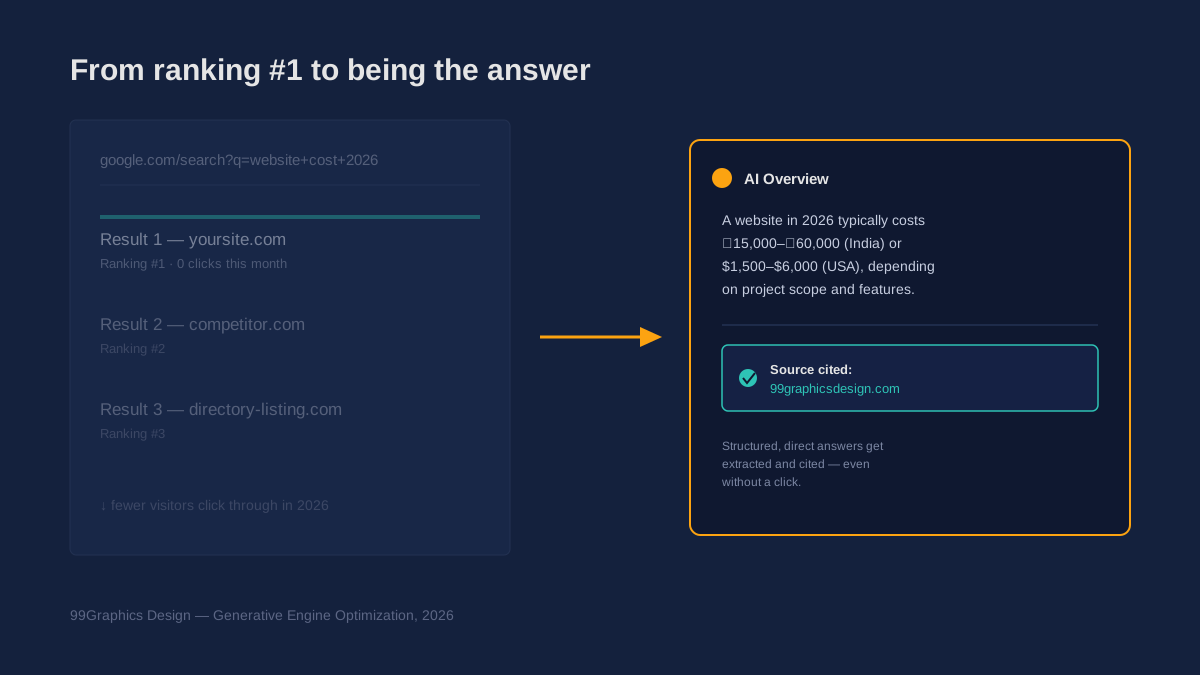
Generative engine optimization (GEO) is the practice of structuring your website’s content so AI systems — Google AI Overviews, ChatGPT, Perplexity, and Gemini — can easily extract, trust, and cite it when generating an answer. Unlike traditional SEO, which optimizes for ranking position, GEO optimizes for being the source an AI quotes, even when the user never clicks through to your site. The core requirements are: clear, direct answers near the top of the page, structured data (schema markup), consistent brand/entity information across the web, and content that reads as genuinely trustworthy rather than keyword-stuffed.
Why Your Website Traffic Is Dropping (Even If Rankings Look Fine)
Here’s what’s actually happening behind the scenes. When someone searches “best CRM for small business” or “how much does a website cost,” Google increasingly shows an AI-generated summary before any blue links. Perplexity and ChatGPT skip search result pages entirely — they read across the web, synthesize an answer, and hand it directly to the user.
The result: your page can rank #1 organically and still see traffic fall 20-40%, because a large share of searchers now get their answer without visiting anyone’s website. This is often called the “zero-click” problem, and it’s the single biggest reason business owners are confused about why their SEO agency’s reports still show good rankings while leads have quietly dried up.
The businesses that are adapting well aren’t the ones with the biggest content libraries — they’re the ones whose content is structured in a way AI systems can lift cleanly and attribute confidently.
SEO vs AEO vs GEO — What’s Actually Different in 2026
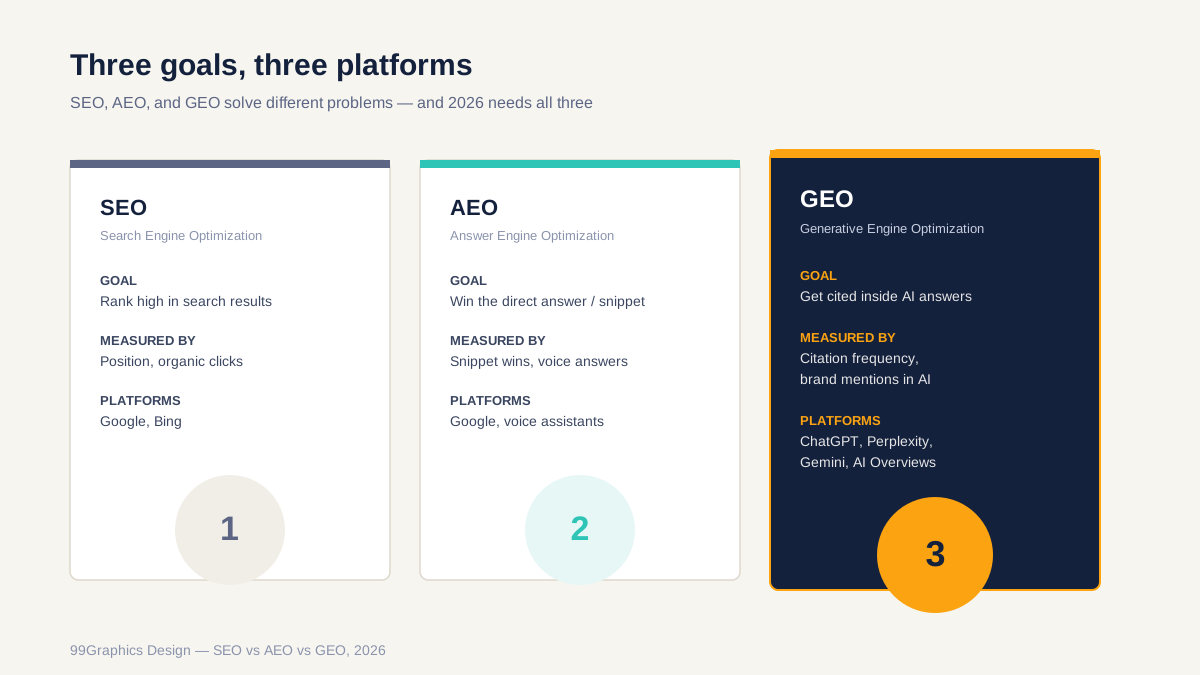
These three terms get thrown around interchangeably, but they solve different problems, and understanding the distinction matters for how you plan content going forward.
| Goal | Success Metric | Primary Platform | |
|---|---|---|---|
| SEO | Rank high in search results | Position, organic clicks | Google, Bing |
| AEO (Answer Engine Optimization) | Get selected as a direct answer/featured snippet | Featured snippet wins, voice search answers | Google, voice assistants |
| GEO (Generative Engine Optimization) | Get cited inside AI-generated responses | Citation frequency, brand mentions in AI answers | ChatGPT, Perplexity, Gemini, AI Overviews |
They’re not competing strategies — they overlap heavily, and strong SEO fundamentals (site speed, mobile-friendliness, backlinks) still support all three. But GEO adds a new layer: your content now has to be written in a way that’s easy for an AI model to extract as a standalone, accurate answer.
How AI Overviews and ChatGPT Actually Pick Which Sites to Cite
Understanding the selection logic makes the rest of this guide make sense. AI systems generally favor sources that show three things:
1. Direct, unambiguous answers. If a user asks “how much does website maintenance cost,” and your page buries the number three paragraphs deep inside a story about your company history, the AI has to work harder to extract it — and it usually skips you in favor of a competitor who states the number plainly near the top.
2. Structured data. Schema markup (FAQ schema, HowTo schema, Article schema) tells AI crawlers exactly what type of content they’re looking at and what the key facts are, without guessing.
3. Consistent entity signals. AI models cross-reference multiple sources before trusting one. If your business name, address, services, and claims are consistent across your website, Google Business Profile, LinkedIn, and industry directories, you build what’s called entity consistency — and inconsistent information is one of the fastest ways to get quietly excluded from AI answers.
A 7-Step GEO Checklist for Small Business Websites
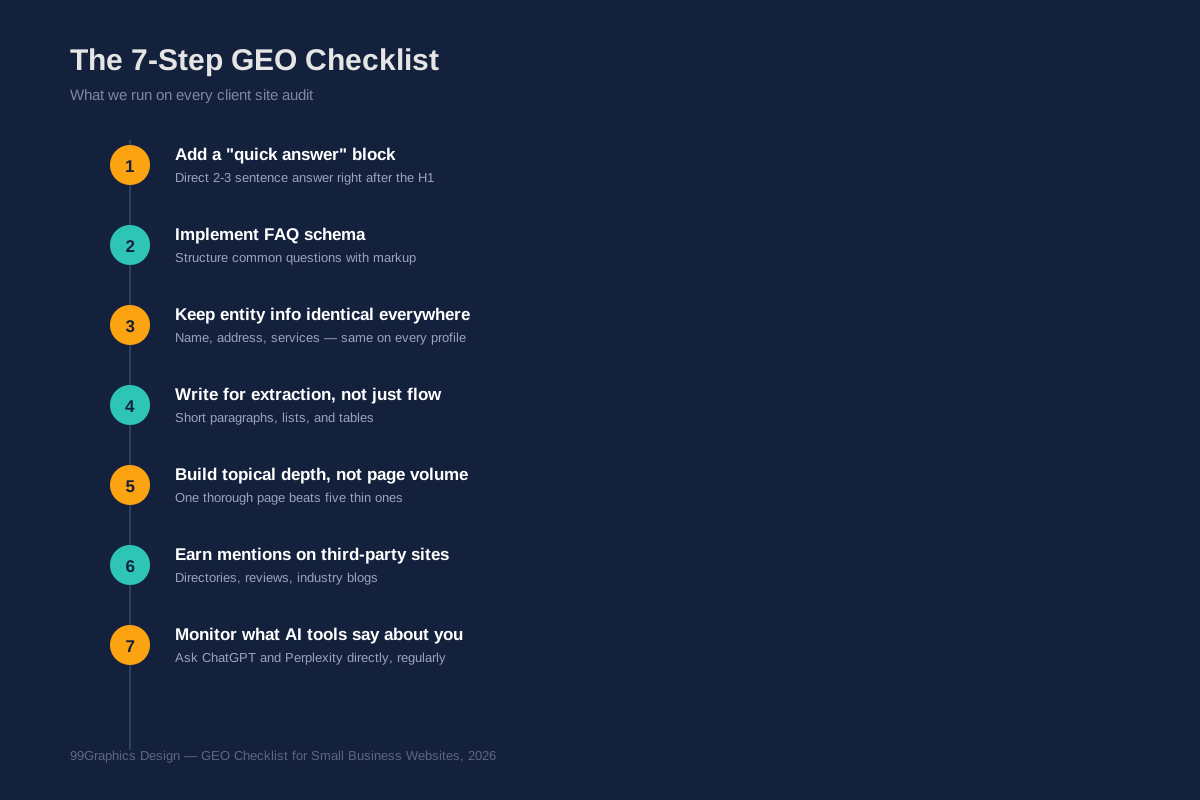
This is the exact framework we use when auditing a client’s site for AI search visibility.
1. Add a “quick answer” block to every important page. Right after your H1, include a 2-3 sentence direct answer to the primary question that the page is meant to answer. This is the single highest-impact change most small business sites can make.
2. Implement FAQ schema on service and blog pages. Structure your most common customer questions as an FAQ section with markup. This is one of the easiest ways to appear in both Google’s AI Overviews and voice search results, and it directly supports answer engine optimization AEO efforts already on your site.
3. Keep your entity information identical everywhere. Business name, address, phone number, and core service descriptions should match word-for-word across your website, Google Business Profile, and social profiles. Inconsistencies erode the trust signals AI models rely on.
4. Write for extraction, not just for reading flow. Break complex answers into short paragraphs, numbered lists, and tables wherever possible. AI systems pull cleanly formatted content far more reliably than long, narrative paragraphs.
5. Build topical depth, not just page volume. A single, thorough page that fully answers a topic outperforms five thin pages targeting slightly different keyword variations. AI systems tend to favor comprehensive sources over fragmented ones.
6. Earn mentions on third-party sites. AI models draw from multiple sources to build confidence in an answer. Getting mentioned — even without a backlink — on industry blogs, review sites, and directories strengthens your visibility for AI search visibility overall.
7. Monitor what AI tools are actually saying about you. Periodically ask ChatGPT and Perplexity questions relevant to your business (“best web design company in Kolkata,” for example) to see whether you’re being cited and how accurately.
How to Rank in ChatGPT Answers Specifically
ChatGPT doesn’t crawl the web live for every query, but when browsing is enabled or when it’s referencing training-adjacent knowledge. It favors sources that are frequently referenced elsewhere and structured clearly. To improve how to rank in ChatGPT answers for your business:
- Make sure your website content answers questions directly, in plain language, near the top of the page
- Keep a clean, well-organized “About” and “Services” page — these are commonly referenced when ChatGPT is asked about a specific company
- Get listed and reviewed on platforms ChatGPT commonly draws from, including Google Business Profile, Clutch, and industry-specific directories
How to Appear in Perplexity Answers
Perplexity is more transparent than most AI tools — it shows its sources directly, which means you can actually observe whether you’re being cited. To improve how to appear in Perplexity answers:
- Publish original data, pricing, or research (Perplexity favors sources with specific, verifiable facts over generic claims)
- Use clear headings that match common question phrasing, since Perplexity tends to match query intent closely to page structure
- Keep pages updated — Perplexity favors recently modified content when multiple sources say roughly the same thing
Schema Markup for AI Search: What to Prioritize
You don’t need every schema type on every page. For most small business websites, prioritize:
- FAQPage schema — for any page with a Q&A section
- Organization schema — on your homepage, to establish clear entity information
- Article schema — on blog posts, including author and publish date
- LocalBusiness schema — if you serve a specific city or region
- Product/Service schema — for individual service or product pages
This is technical work, but it’s a one-time setup per page template, not an ongoing cost — which makes it one of the highest-ROI items on this list.
GEO for Small Business: Realistic Expectations
If you’re a small business owner reading this, wondering whether GEO is worth the effort without an enterprise marketing budget, here’s the honest answer: yes, but expectations need to be realistic. You won’t out-cite a major brand with a massive content library overnight. What you can realistically achieve is becoming the cited, trusted local or niche answer — for example, being the source ChatGPT cites when someone asks about website design companies in Kolkata, rather than competing to be cited for “best website design company” globally.
Start narrow. Optimize the pages tied to your actual services and location first, then expand outward as you see citation improvements.
What We’re Doing at 99Graphics Design
We’ve been restructuring client websites around GEO principles throughout 2026 — adding quick-answer blocks. Implementing schema across service pages and cleaning up entity consistency across directories and profiles. The pattern we keep seeing is consistent: sites that make these structural changes start appearing in AI-generated answers within 6-10 weeks. Well before any major backlink campaign would show comparable results.
This isn’t a one-time fix, though. AI search behavior is still evolving, and staying visible means treating GEO as an ongoing part of your content strategy, not a single audit you complete and forget.
Want a free audit of how your website currently shows up (or doesn’t) in AI search results? Talk to 99Graphics Design and get a practical GEO roadmap built around your actual business.
How to Measure GEO Success (Since Clicks Aren’t the Whole Picture)
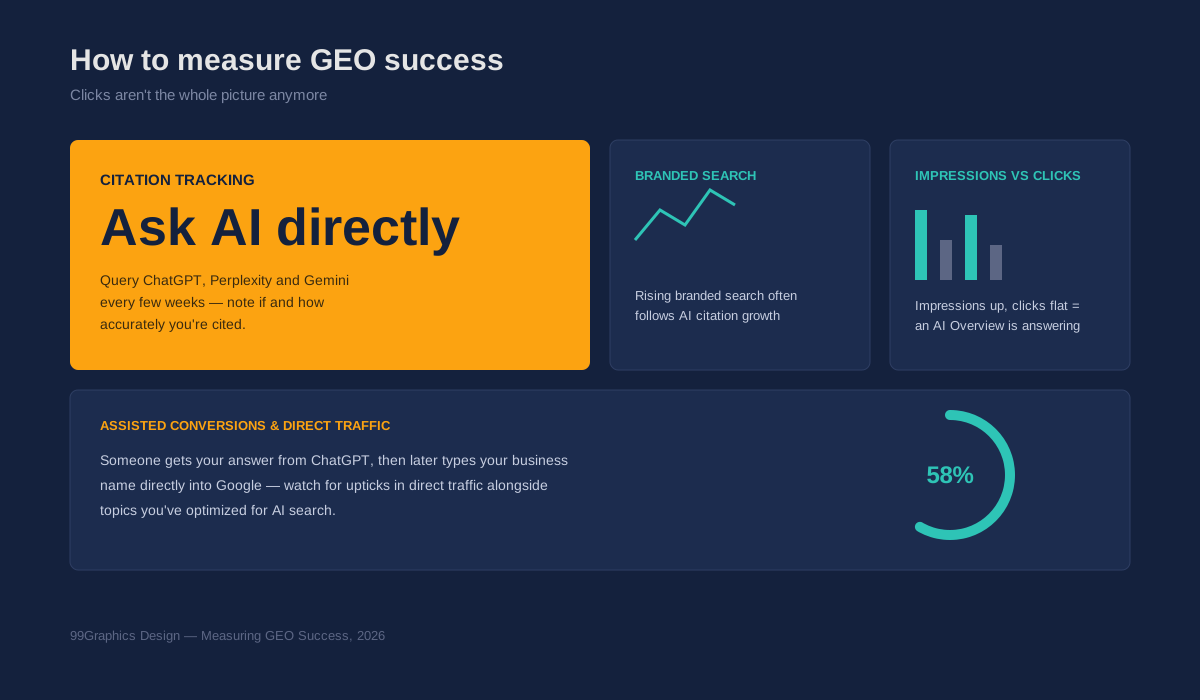
Traditional SEO reporting leans heavily on organic clicks and rankings. GEO requires a different set of metrics because success often means your content gets used without a click at all.
Citation tracking. Manually or with a tool, ask ChatGPT, Perplexity, and Gemini questions relevant to your business every few weeks and note whether your site is cited and how accurately your business is described. This is the closest thing to a direct GEO success metric right now.
Branded search growth. When AI tools mention your business by name without a link, some users still go search for you directly afterward. A rise in branded search volume (visible in Google Search Console) is often a downstream sign that AI citations are working, even if you can’t trace the exact source.
Impressions vs. clicks in Search Console. If impressions for a query are climbing but clicks are flat or falling, that’s a strong signal that an AI Overview is now answering that query above your listing — which tells you exactly which pages need GEO attention first.
Assisted conversions and direct traffic. Someone who gets your answer from ChatGPT may not click a link, but they might later type your business name directly into Google or visit your site from memory. Watch for upticks in direct traffic alongside AI-related topic coverage.
None of these metrics are as clean as a keyword ranking report, but together they paint an honest picture of whether your GEO efforts are working.
Common GEO Mistakes That Undo Good Work
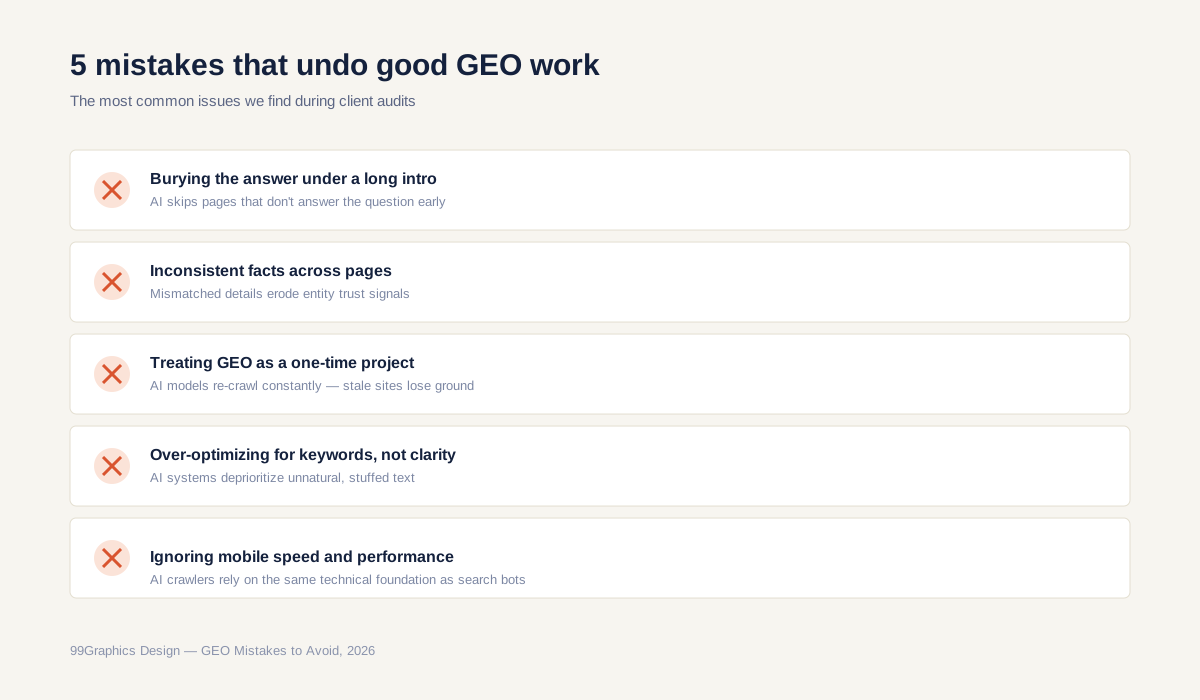
Most of the small business sites we audit make one or more of these mistakes, often without realizing it.
Burying the answer under a long introduction. If your page opens with three paragraphs of storytelling before answering the actual question. AI systems will often skip your page in favor of a competitor who leads with the answer.
Inconsistent facts across pages. If your homepage says “10+ years of experience” and your About page says “since 2018,” that inconsistency undermines the entity trust signals AI models use to decide whether to cite you.
Treating GEO as a one-time project. AI models retrain and re-crawl continuously. A site optimized once in early 2026 and never revisited will likely lose visibility by the time competitors catch up with fresher, better-structured content.
Over-optimizing for keywords instead of clarity. Cramming keyword variations into a paragraph might have worked for 2015-era SEO, but it actively hurts GEO performance. AI systems are trained to recognize and deprioritize unnatural, keyword-stuffed text in favor of clear, human-sounding answers.
Ignoring mobile and page speed. AI crawlers still depend on the same technical foundation as traditional search bots. A slow, poorly optimized site can get skipped over regardless of how well the content itself is structured.
FAQ Content Is Now a Traffic Strategy, Not Just a Support Page
Most businesses treat their FAQ section as an afterthought — something added at the bottom of a page to reduce support emails. In 2026, FAQ content is one of the most direct paths into AI-generated answers, because it’s already formatted the way AI systems prefer: a clear question followed by a clear, self-contained answer.
If you only have time to update one part of your existing website for GEO, expand your FAQ sections first. Pull the actual questions customers ask you by phone, email, or chat, and answer them in two to four sentences each, with FAQ schema markup applied. This single change tends to produce the fastest visible improvement in AI citation frequency of anything on this list.
Want a free audit of how your website currently shows up (or doesn’t) in AI search results? Talk to 99Graphics Design and get a practical GEO roadmap built around your actual business.
By the 99Graphics Design Team | Updated for September 2026
FAQs (SEO Optimised for Featured Snippets)
What's the difference between AEO and GEO?
AEO (Answer Engine Optimization) focuses on winning featured snippets and direct answers within traditional search results. GEO (Generative Engine Optimization) focuses specifically on being cited inside AI-generated responses from tools like ChatGPT, Perplexity, and Google AI Overviews. They overlap significantly but target slightly different systems.
Why did my traffic drop even though my rankings stayed the same?
This is the Google AI Overview traffic drop phenomenon — your page still ranks well, but a growing share of searchers get their answer directly from the AI summary and never click through to any website, including yours.
Can small businesses realistically compete for AI search visibility against big brands?
Yes, particularly for local, niche, or specific queries. AI systems often prefer a clear, well-structured answer from a smaller, relevant source over a generic page from a large brand, especially for location-based or highly specific questions.
Does schema markup guarantee I'll be cited by AI tools?
No single element guarantees citation, but schema markup for AI search significantly improves the odds by making your content's structure and facts unambiguous to crawlers and language models.
How long does it take to see results from GEO efforts?
Most sites we've worked with start showing up in AI-generated answers within 6-10 weeks of structural changes, though this varies based on how competitive the topic and location are.
Is traditional SEO still worth investing in, or should I switch entirely to GEO?
Traditional SEO fundamentals — site speed, mobile usability, quality backlinks — still support your visibility in both classic search and AI answers. GEO is an addition to a solid SEO foundation, not a replacement for one.

Ready for
Digital Transformation?